Langugae SWITCH


Members of the What Kind of Cities Do We Want? project have taken part in participatory planning processes initiated by the City of Zagreb concerning the design and transformation of public spaces (first half of 2026).
As part of the preparation of the Park Novi Zagreb Area Study and the programme guidelines for the development of the Park Novi Zagreb urban project, a public survey and around ten participatory workshops were organised with members of the public and professional stakeholders. The findings will serve as the basis for the preparation of the urban development plan, the architectural and urban design competition, and the development of a new park covering approximately 70 hectares. The participatory process was coordinated by VITA projekt. Invited as experts in urban anthropology and research conducted in Novi Zagreb, we contributed to the participatory workshops and provided expert input. Project members Valentina Gulin Zrnić, Mirna Tkalčić Simetić, and Sanja Đurin participated in this process.
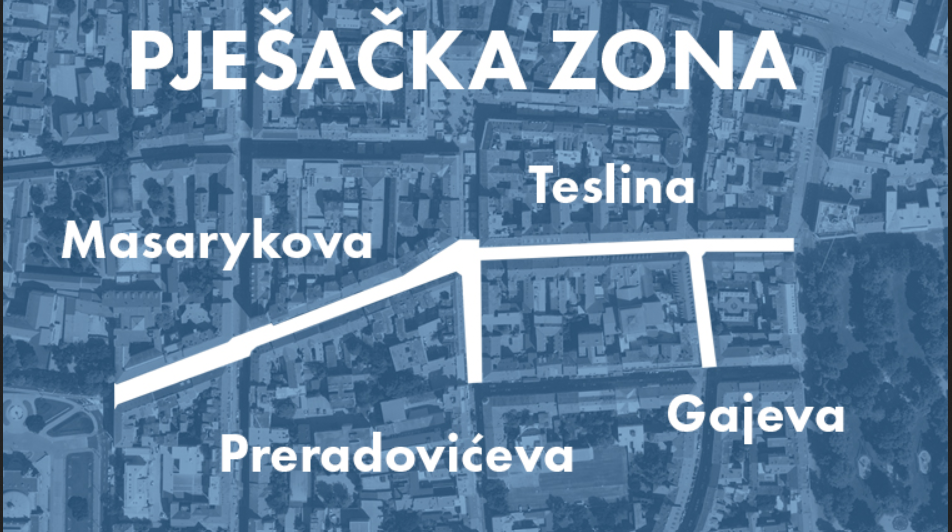
Another extensive participatory process was carried out within the project to redesign and extend the pedestrian zone in Masarykova and Teslina Streets, including sections of Preradovićeva and Gajeva Streets. Public participation began with a series of forums involving a wide range of user groups (local residents, visitors, people with disabilities, staff from cultural institutions located in the area, business owners, hospitality workers, and cyclists) in order to identify their specific needs and concerns. This was followed by survey and field research, as well as public presentations of the research findings and the development of design guidelines for the conceptual proposal for the pedestrian zone.
The conceptual design was prepared by a team of experts from the City of Zagreb Institute for Physical Planning, with architects Tea Truta and Domagoj Mlinarić playing a leading role in the participatory activities. Valentina Gulin Zrnić, Tihana Rubić, and Sanja Đurin contributed through preliminary ethnographic research conducted within the pedestrian zone, building on earlier project research into public spaces in central Zagreb. The findings were incorporated into the preparation of the design guidelines. They also served as moderators during the public workshops held on 1 and 2 July at ZgForum, the City of Zagreb’s public forum for urban development.
During the workshops, the results of the public forums and research were presented, providing the basis for the conceptual design proposal, which was also introduced to participants. The proposal is based on increasing urban greenery and creating a series of smaller public spaces, particularly at street intersections, with the character of neighbourhood squares, with the aim of creating more socially vibrant and climate-responsive public spaces. Citizens representing diverse user groups took part in discussions on specific aspects of the proposal, seeking to reconcile the often differing and sometimes conflicting needs of various users. The recommendations emerging from these discussions will be incorporated into the further development of the conceptual design.
Through collaborations with the City of Zagreb, private companies, and public institutions, we strive to enhance the practical application of our qualitative urban anthropological research. We foster cooperation among a wide range of stakeholders in order to co-produce relevant knowledge and develop inclusive urban solutions, while strengthening the role of research in urban governance. In doing so, we seek to ensure that urban futures are co-created, sustainable, and responsive to the voices, needs, and perspectives of diverse urban communities. These collaborations also form an important foundation for the newly established FUTURUS Centre.