
Langugae SWITCH


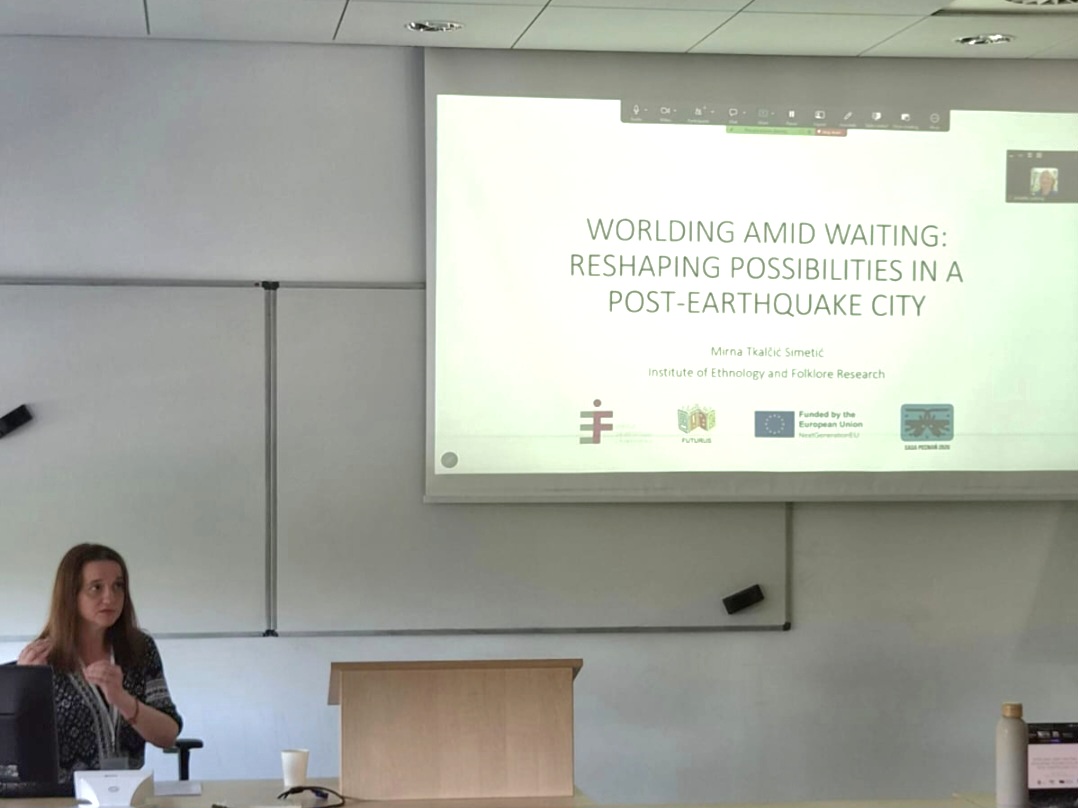
Mirna Tkalčić Simetić sudjelovala je na konferenciji EASA 2026 „Anthropology: Possibilities in a Polarised World“, održanoj u Poznańu, gdje je 21. srpnja 2026. održala izlaganje „Worlding amid waiting: reshaping possibilities in a post-earthquake city“.
Izlaganje je održano u okviru panela DiCAN mreže „Anthropology at the ends of the world: Disturbing world and worldings“, a temeljilo se na dugotrajnom etnografskom istraživanju poslijepotresne Petrinje.
Sažetak izlaganja:
Catastrophes do not begin with disastrous events, nor do they end with them. Rather, they unfold as prolonged processes that reconfigure material conditions, relations to the future, and capacities for engagement. In such contexts, the “end of worlds” is a process within which worlds are actively re-made through political and everyday actions of residents. The paper explores these processes through the case of Petrinja, Croatian town struck by a devastating earthquake on 29 December 2020, which resulted in the loss of lives, widespread displacement, the destruction of the historic city centre, and the deroutinisation of everyday life. The aftermath was defined by a period of waiting for state-led reconstruction that lasted more than two years and whose effects extend beyond the onset of reconstruction. This waiting unfolded within a systemically produced temporal and material framework shaped by administrative congestion, broken promises, and inadequate crisis communication, further intensified by its overlap with the COVID-19 pandemic. Drawing on post-war reconstruction experiences, residents perceived this period as one marked by uncertainty and the city’s slow demise through outmigration. The paper examines how these experiences translated into situated practices of worlding within and against this politically imposed framework of waiting. It shows how the horizon of possibilities, hopes, and expectations was continually reshaped through various forms of engagement and withdrawal, and how contested personal and collective futures remained central to these dynamics. The paper argues that attention to such practices is crucial for anthropological understandings of re-worlding in post-earthquake contexts.
Fotografija: Tomislav Augustinčić